43 வயதான சர்க்கரை நோயாளி இவர். இவருக்கு 8 வருடங்களாக சர்க்கரை இருந்தது.
கால் நரம்புகளில் பாதிப்பு ஏற்பட்டு கால் பெருவிரலில் 1 வருடமாக புண் இருந்தது.
ஒரு வருடமாக அந்த” புண் ஆறாததால் சிரமப்படுகிறேன்” என மருத்துவமனைக்கு வந்தார்.
அவருடைய பரிசோதனை முடிவுகள் .
அவருடைய சர்க்கரையோட அளவு PPBG 334 MGS% இருந்தது மூன்று மாத சக்கரையோட அளவும் HBA1C 9.8%MGS இருந்தது.
நாங்கள் அவரை பரிசோதனை செய்து அட்மிஷன் போட்டு சர்க்கரையை குறைக்க IV இன்சுலின் கொடுத்தோம்.
மேலும் முறையான ஆண்டிபயாட்டிக் கொடுத்து எங்களது மருத்துவமனையில் உள்ள எலும்பு மருத்துவர் அவரது காலில் உள்ள புண்ணை சுத்தம் செய்து அதில் கெல்லரின் ஆர்த்ரோபிளாஸ்டி [KELLERIN PELLET ARTHROPLASTY] ஆபரேஷன் செய்தார்.
அட்மிஷன் செய்த 5வது நாள் அவரை நாங்கள் வீட்டுக்கு அனுப்பி வைத்து விட்டோம் .
பிறகு 3 நாட்களுக்கு ஒரு முறை வந்து ட்ரெஸிங் போட வருமாறு அறிவுரை செய்தோம்.
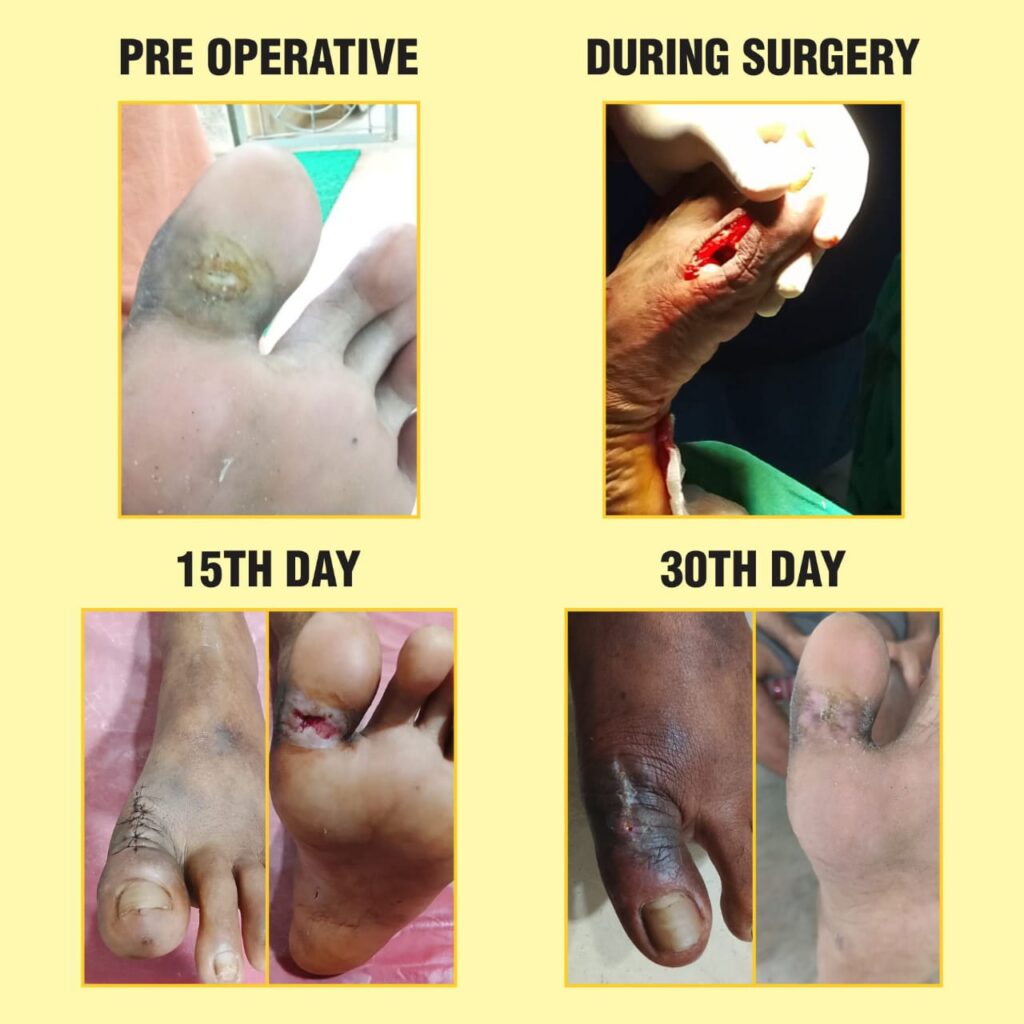
1 மாதத்தில் அவரது புண் ஆறிவிட்டது.
தற்போது அவருக்கு புண் இருந்ததற்கான தழும்பு மட்டும்தான் இருக்கிறது.
1 வருட புண் முழுவதுமாக ஆறிவிட்டது.
தற்போது சர்க்கரை மாத்திரை சாப்பிட்டு, நல்ல சர்க்கரை கட்டுப்பாட்டில் நலமுடன் வாழ்ந்து வருகிறார்.
“தற்போது சர்க்கரை நோய்க்கான மாத்திரைகள சாப்பிட்டு
சர்க்கரை அளவை நன்றாகக் கட்டுப்பாட்டில் வைத்து நலமுடன் வாழ்ந்து வருகிறார்.”
இதற்கான படங்களை பதிவிட்டுள்ளோம்.
- 43 Years old male patient presented with non healing ulcer on the Lt great toe for 1 year.
- Fever off and on (+).
ON EXAMINATION
- He was conscious, oriented, febrile, tachycardia.
- Local examination: Non healing neuropathic ulcer F1 Lt foot, no evidence of infection.
HER INVESTIGATION:
- Random blood sugar : Blood Sugar: 334mgs%
- Blood Urea: 30mgs%
- Serum creatinine:1.0mgs%
- HbA1c :9.8%
- Total Count: 5700 cells/cumm [P 54%, L43%,E03%]
- Hb%: 14.8 gms%
- Urine acetone : Negative
- ECG : Normal
CLINICAL DIAGNOSIS
- DM Type2,
- Chronic neuropathic ulcer Lt great toe (IP joint area)
He was admitted in our hospital and treated with broad spectrum antibiotics, Metronidazole, insulin infusion.
- After glycemic control (on her 2rd admission day), he underwent wound debridement with Keller gap arthroplasty done, by orthopedic surgeon.
POST OP
- Post prandial Blood Sugar: 132mgs%
- Hb 12.6 gms%,
- Blood Urea: 26mgs%
- Serum creatinine: 1.0mgs%
- 3rd post-operative day, and patient made a rapid recovery.
- Patient discharged 5th day of admission.
- Patient treated in OPD, the wound was regularly cleaned.
- Subcutaneous insulin with oral antibiotics and anti inflammatory drugs given.
- Wound completely healed after 3 weeks, no evidence of infection and ulcer.
- This patient later on could be managed on oral antidiabetics drugs.
- Photos enclosed.
Clinical notes:
# Neuropathic ulcer
Neuropathic ulcers are chronic, often painless, open sores primarily occurring on the feet due to peripheral nerve damage, most commonly caused by diabetes (diabetic foot ulcers). They result from loss of sensation, causing unrecognized trauma and high pressure on the plantar surface. Treatment involves strict off-loading, infection control, and vascular assessment.
# Keller gap arthroplasty
Keller gap arthroplasty (or Keller resection arthroplasty) is a surgical procedure that involves removing the base of the proximal phalanx in the big toe to treat severe hallux rigidus (stiff toe), hallux valgus (bunion), or chronic ulcers. The procedure decompresses the first metatarsophalangeal (MTP) joint, typically offering pain relief and improved mobility for older, lower-demand patients, often with a 94% success rate in healing ulcers.